
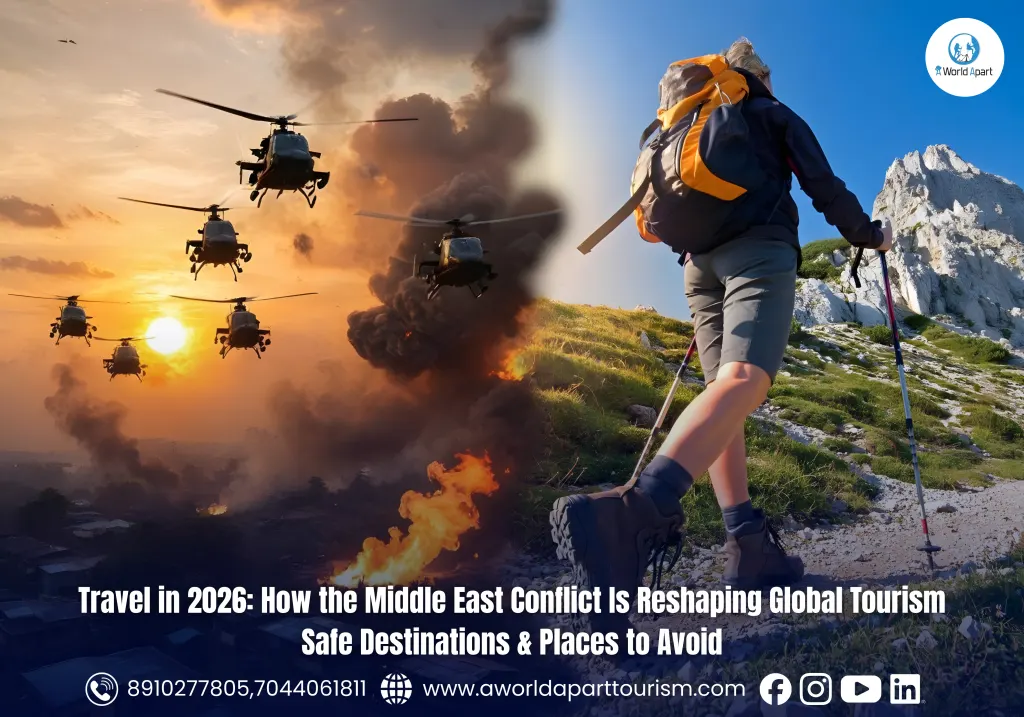
In 2026, global travel is experiencing a subtle but important shift. The ongoing conflict involving Iran, Israel, and several regional powers has created uncertainty across parts of the Middle East, leading governments, airlines, and travellers to rethink travel plans.
While the world is not shutting down for travel, the current situation has changed flight routes, tourism demand, and safety perceptions in certain regions. For travelers planning international trips, understanding the current global travel landscape has become more important than ever.
Let’s explore what the current travel scenario looks like.
The Current Global Travel Scenario
The war in parts of the Middle East has started affecting aviation routes, tourism flows, and travel advisories worldwide. Many international airlines have rerouted flights to avoid conflict zones and certain airspaces in the region have been partially closed or restricted.
In some Gulf countries, airports and airlines have faced disruptions due to military tensions and security concerns. Flights have been cancelled or diverted, and governments have issued advisories urging travelers to stay cautious.
Tourism experts say that traveler sentiment is shifting, with many people choosing destinations perceived as politically stable. This shift is already redirecting tourism demand from the Middle East to destinations in Europe and other parts of the world.
The key takeaway:
Travel is still happening globally, but travelers are prioritizing stability, safety, and well-connected destinations.
Destinations Travelers Should Avoid (For Now)
Due to active conflicts or severe political instability, several countries are currently considered high-risk travel zones. Governments across the world have advised citizens to avoid travel to these areas.
High-Risk or Conflict-Affected Regions
- Iran
- Israel and Palestinian territories
- Syria
- Yemen
- Lebanon
- Iraq
- Afghanistan
These destinations are experiencing active conflict, military activity, or severe security instability. Many countries have issued “Do Not Travel” warnings for these locations.
Even if flights exist, insurance coverage, emergency support, and travel services may be limited.
Regions That Require Caution
Some countries are not directly at war but are geographically close to the conflict. Because of that, governments are advising travelers to exercise caution or reconsider non-essential travel.
Countries With Heightened Travel Advisories
- United Arab Emirates
- Qatar
- Kuwait
- Bahrain
- Saudi Arabia
- Jordan
These countries remain functional travel destinations, but the conflict has caused airspace disruptions, security alerts, and occasional travel advisories.
Travelers visiting these destinations should:
- Monitor airline updates
- Register with their embassy
- Purchase comprehensive travel insurance
Safe Destinations to Consider in 2026
Despite geopolitical tensions, most of the world remains completely safe for travel. In fact, many regions are experiencing increased tourism as travelers shift their plans away from conflict zones.
Safe and Popular Travel Destinations
Europe
- Spain
- Portugal
- Italy
- Switzerland
- Greece
European destinations are seeing increased tourist interest as travelers look for stable travel options.
Southeast Asia
- Thailand
- Vietnam
- Bali (Indonesia)
- Singapore
- Malaysia
These destinations continue to be among the safest and most welcoming tourist hubs in the world.
East Asia
- Japan
- South Korea
- Taiwan
These countries are known for safety, efficient infrastructure, and excellent tourism experiences.
Africa (Selective Destinations)
- Egypt (major tourist areas like Cairo, Luxor, and Red Sea resorts remain stable)
- Morocco
- South Africa
Closer to Home (For Indian Travelers)
- Sri Lanka
- Bhutan
- Maldives
- Vietnam
- Thailand
These destinations are currently some of the most popular and stable international travel options for Indian tourists.
How Smart Travelers Are Planning Trips in 2026
The new travel mindset is simple: plan smart, stay informed, and remain flexible.
Here are some tips travelers are following today:
✔ Check government travel advisories before booking
✔ Choose destinations with strong tourism infrastructure
✔ Purchase travel insurance covering geopolitical disruptions
✔ Avoid transit routes through conflict zones
✔ Stay updated on airline and embassy notifications
Travel experts emphasize that global tourism rarely stops completely, even during geopolitical tensions. Instead, it adapts and redirects to safer regions.
The Bigger Picture: Travel Still Connects the World
Despite the uncertainties in parts of the Middle East, travel continues to thrive across much of the world. Beaches, mountains, cultural cities, and remote escapes remain open and welcoming.
In many ways, travel becomes even more meaningful during uncertain times. It reminds us that the world is still full of beauty, cultures worth discovering, and people eager to connect.
The key is simply choosing the right destinations at the right time.
Ready to pack your bags? Contact A World Apart, Kolkata, + 91 70440 61811 today to book your seat for our upcoming Group departure and experience the best of India & Abroad.
FAQ’s :
1. Is it safe to travel internationally during the Middle East conflict?
Yes, most parts of the world remain safe for travel. While certain countries in the Middle East are experiencing conflict, destinations across Europe, Southeast Asia, East Asia, and parts of Africa continue to welcome tourists safely. Travelers should always check government travel advisories before planning a trip.
2. Which countries should travelers avoid right now?
Countries experiencing active conflict or severe instability include Iran, Israel, Syria, Yemen, Lebanon, Iraq, and Afghanistan. Many governments have issued strong travel advisories for these destinations, and travelers are generally advised to postpone trips there.
3. What are the safest destinations to travel in 2026?
Some of the safest and most popular destinations currently include Spain, Portugal, Switzerland, Japan, Thailand, Vietnam, Bali, Singapore, and Bhutan. These countries have stable tourism infrastructure and remain top choices for international travelers.
4. Are flights affected because of the Middle East war?
Some airlines have rerouted flights to avoid certain airspaces in the Middle East. This may slightly increase travel time or change transit routes, but global aviation continues to operate normally across most regions.
5. How can travelers stay safe while planning international trips?
Travelers can stay safe by checking official travel advisories, purchasing comprehensive travel insurance, avoiding conflict zones, choosing politically stable destinations, and staying updated on airline and embassy notifications.